November 4, 2021
Abby Nuttall
Driver Articles
With the clocks turning back, the nights getting darker and the air a little crisper we’re all starting to feel the beginnings of winter.
In colder weather how we look after things changes. We put an extra layer or thicker coat on to stay warm, turn up the heating or use the tumble dryer for laundry and turn the lights on a little earlier. So, it shouldn’t be a surprise that the way we look after our cars will also need to be a little different.
To help you look after your car as we enter the colder months we’ve gone through our best advice and rounded up the top ten recommendations that we give drivers.
Read on to find out what they are.
It’s important to check your tyres all year round, but in winter months with other challenges like water and ice on the road you want them to be in the best possible condition to ensure maximum traction.
You should regularly check your tyres to ensure they are at the correct pressure and there’s enough tread on them.
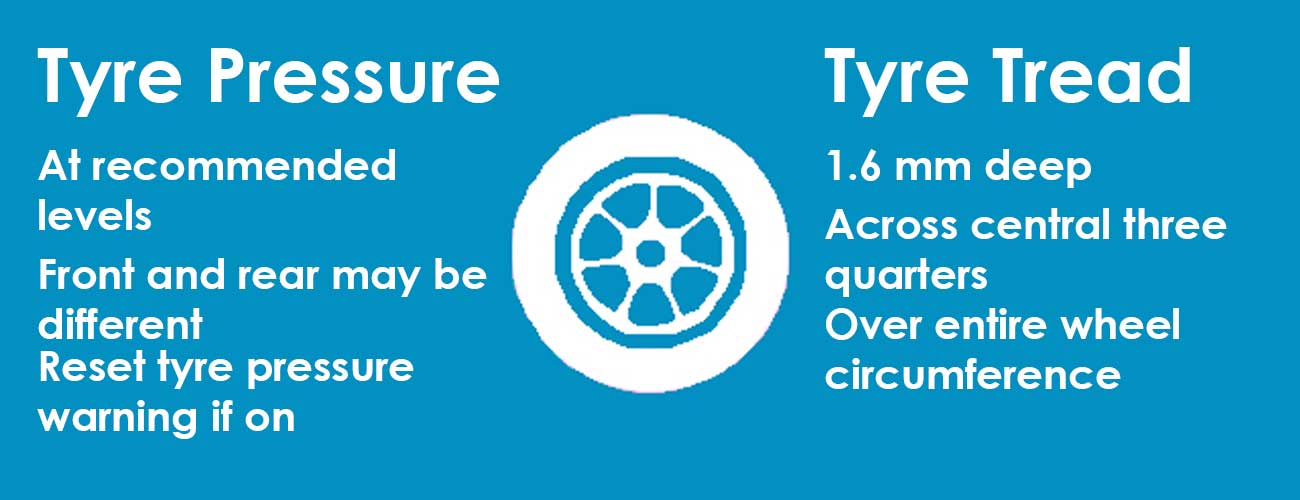
You should also visually check all your tyres for any cracks, cuts or bulges and if you notice any you should take the vehicle into the garage for the tyre to be repaired or replaced.
If your vehicle has a spare wheel then you should check this as well – there’s nothing worse than getting a flat and then realising your spare is unusable too.
Again, you should check your fluids throughout the year but it is particularly important that you check some in winter.
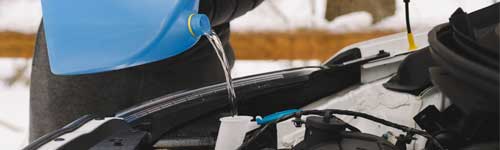
Your screen wash for example is important to ensure it doesn’t run out as in wet weather muddy puddles can quickly build up residue that blocks your vision.
Any chips, scratches and cracks to your glasswork are serious no matter how small they are as they can impair the driver’s vision, make dazzle and glare from the sun and headlights much worse, can suddenly worsen and break injuring someone.
If there is damage of 40mm or larger anywhere on the windscreen or of 10mm in the section of the windscreen that centres on the steering wheel and is 290mm wide, then your vehicle will fail its MOT as damage of this size will impede your vision.
It is often cheaper and quicker to get a small crack or chip repaired than to wait for them to worsen and need to replace the entire windscreen. A chip can usually be repaired by injecting epoxy or acrylic adhesive into it whereas a larger crack will need a more detailed repair or even replacement.
In the winter it’s even more important to get any damage repaired quickly as water can get into the cracks, freeze and then when it melts again expands in volume and worsens the damage.
In winter weather batteries are more likely to die because they work less efficiently in cold weather.
If the car is unused for a period of time then you should regularly turn the engine on and let it run for around 30 minutes to prevent the battery from running flat.
When possible you should also drive the car as this not only helps the battery but also prevents the brakes from seizing if they are in the same position for too long.
Keeping your car clean not only ensures it looks nice inside and out, but also:
We think it’s important to regularly clean your car throughout the year but during the winter it is essential that you ensure at least the windows, glass and number plates are cleared frequently and never so dirty that visibility is reduced.
When cold weather comes many drivers benefit from putting an insulated waterproof cover over their windscreen to prevent ice from building up on the windscreen overnight.
It’s much more convenient and quicker on a frosty morning to remove a cover than to clear the windscreen, it also reduces the risk of accidental damage caused by the tools used to do so.
We’ve all been guilty of trying to make the last bit of fuel in the tank run as far as possible and in the winter when it’s a little to cold for you to want to get out of the car and fill up this is even more tempting. However, we advise ensuring you’ve got at least a quarter of a tank in the car so that you’re not ever left stranded in the cold and dark because you’ve run out of fuel.
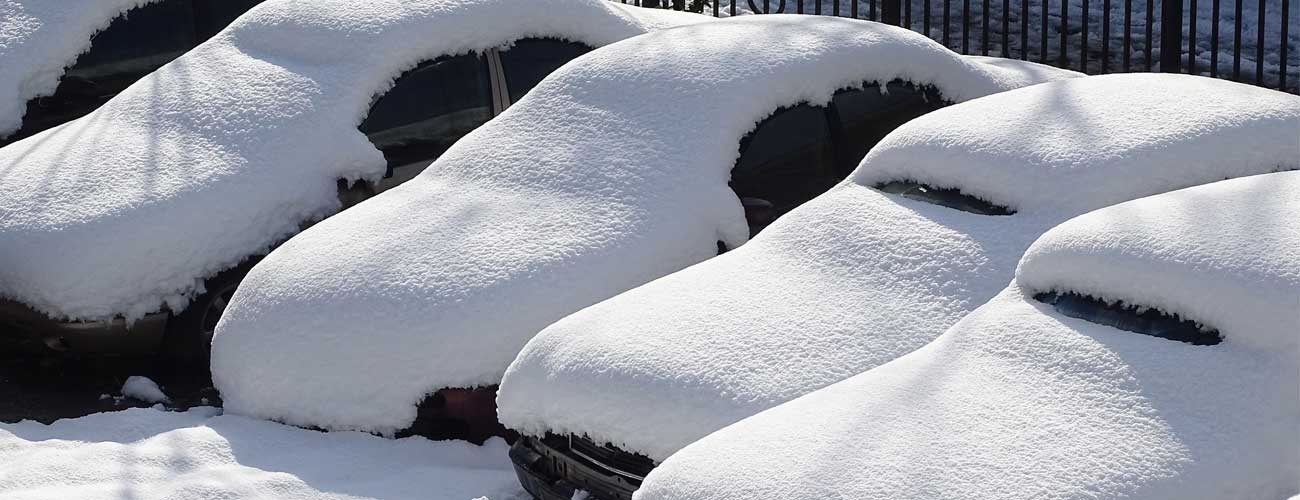
If there is snow overnight or while your vehicle is parked, then you will need to clean it from all windows to ensure your vision is not impaired. Even if it isn’t snow you should still ensure all your windows and mirrors are clear, removing any frost, ice or even mist from them.
Rule 229 of the Highway Code states you must demist the vehicle, clear all mirrors and windows, clean your lights to ensure they are not covered in any frost or something similar and make sure your number plate is visible.
You should also clear the roof of any snow as this can fall while driving which can block your line of sight or cause an obstacle for other road users.
We advise clearing off the car of any snow even if you aren’t planning on heading out to prevent it from hardening and becoming more difficult to remove at a later date.
In the winter you’re more likely to find some unwanted passengers in and around you car as it can provide a warm home for them, especially if the engine is still cooling from a recent journey.
We recommend checking before you set off that there are no cats or other small mammals sheltering under your car.
If the car has been unused for a period of time you might also want to check under the hood and in your wheel arches in case any smaller animals have nested there.
We recommend checking for any animals regularly if the car isn’t being used, as nesting mammals can cause damage to the vehicle’s electrics and other essential systems.
We recommend having some items such as a warning triangle and high-vis in the car all year round but there are some additional items you will want in case of a breakdown in the winter.
During the winter we advise keeping the below in your vehicle:

For more helpful content head back to our blog homepage or check out our new driver guides section.